



Breast Augmentation in Evansville
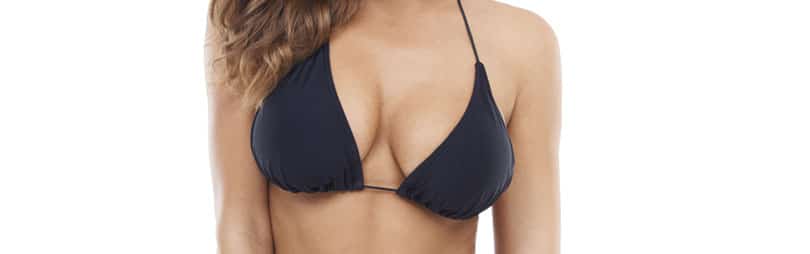
At Conkright Aesthetics, Dr. J. Michael Conkright offers the latest Breast Augmentation techniques to patients in Evansville and nearby areas. If you are interested in rejuvenating your physique and regaining the beauty of your youth, or if you are looking to gain the appearance of your dreams, be sure to give us a call at (812) 842-0240 today! Dr. Conkright can answer any questions you have regarding Breast Augmentation surgery, and can help you determine whether you are a candidate for the procedure.
Patient Testimonial:
What People Say About Us!
I was skeptical about having breast augmentation surgery. Dr. Conkright and ladies in the office couldn't have been more helpful and reassuring to me. The surgery center they use, St. Vincent's was so welcoming I felt they were happy I was there. I could not be more pleased with my results, my breasts are beautiful - Terri J.
Click here to read more reviews.
Overview- About Breast Augmentation Surgery:
Breast augmentation, breast enhancement, or breast enlargement are surgical procedures performed to achieve a more proportionate figure. The primary reason that women seek breast augmentation surgery is because they feel their breasts do not match the rest of their body. Clothes often do not fit well or certain clothing may be avoided altogether.
This disproportion often has a negative effect on a woman's body image and sense of femininity. Self-confidence and self esteem are often affected as well. Inadequate breast volume may be present right after puberty or may be acquired after pregnancy, breastfeeding or significant weight loss. Pregnancy with or without breastfeeding can cause a previously adequate breast to atrophy and deflate.
Youthful fullness can be regained with breast enhancement surgery. Small to moderate weight loss can also result in breast shrinkage and be corrected by augmentation, however, massive weight loss almost always results in a large degree of sagging that would most likely require a breast lift procedure at the same time as implant insertion. Increasing breast size with implants not only enhances the body proportions of a woman who feels her breasts are too small, but can also balance pre-existing differences in breast size.
Breast augmentation has evolved throughout the years. Breast implants have changed and women now have a variety of options available to them. Surgical techniques have also improved and advanced. As you consider your options, there are many factors to consider, and Dr. Conkright and his staff can be a great resource. The following will give you some insight into breast augmentation, your choices, and what to expect.
Things to Consider with Breast augmentations
The first thing you should think about is what you really want. In other words, what is it that you hope breast implants will do for you? Do you just want to be bigger, or do you want to fill out the upper part of your breasts, which might have emptied after pregnancy or with age. Are your breasts uneven in size and shape, and are you looking to make them more symmetrical? Are your breasts sagging and your priority is to have them lifted and made to look perky?
There are other questions that are also important. Is your skin tight or loose? Breast skin loosens after pregnancy, with age, or with cyclic weight gain and loss. How much breast tissue you have to begin with will also affect the way your implants will look on you. If there is an excessive amount of skin, a breast lift may be necessary. There are limits as to what can realistically be achieved, depending on individual situations.
There are a number of issues regarding breast implants that require discussion and decision-making prior to breast augmentation surgery.
Breast Augmentation Before & After
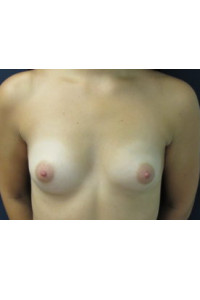
Before Image of Breast Augmentation
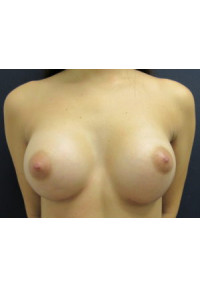
After Image of Breast Augmentation
View More Before & After Photos
Which breast Implant Shape is Best for You?
All breast implants have an outer shell made of silicone elastomer, but the filler material can be either sterile salt water or silicone gel. Implants are usually round, but oval or tear drop-shaped are also available if required. The outer shell can be smooth or have a rough texture. Implants that are not round are always textured so that the implant "sticks" to the surrounding tissue to minimize the chance of the implant turning upside-down or sideways.
However, this can cause skin rippling. Round implants will look the same when rotated in any direction and therefore do not necessarily need to have a rough surface. In Dr. Conkright's practice, both silicone and saline implants are available.
Saline or Silicone Gel Filled breast Implants?
There is no best or better breast implant; they all have some advantages and disadvantages relative to one another.
In most ways silicone gel-filled and saline implants are similar. There is, in most cases, no significant difference in the way that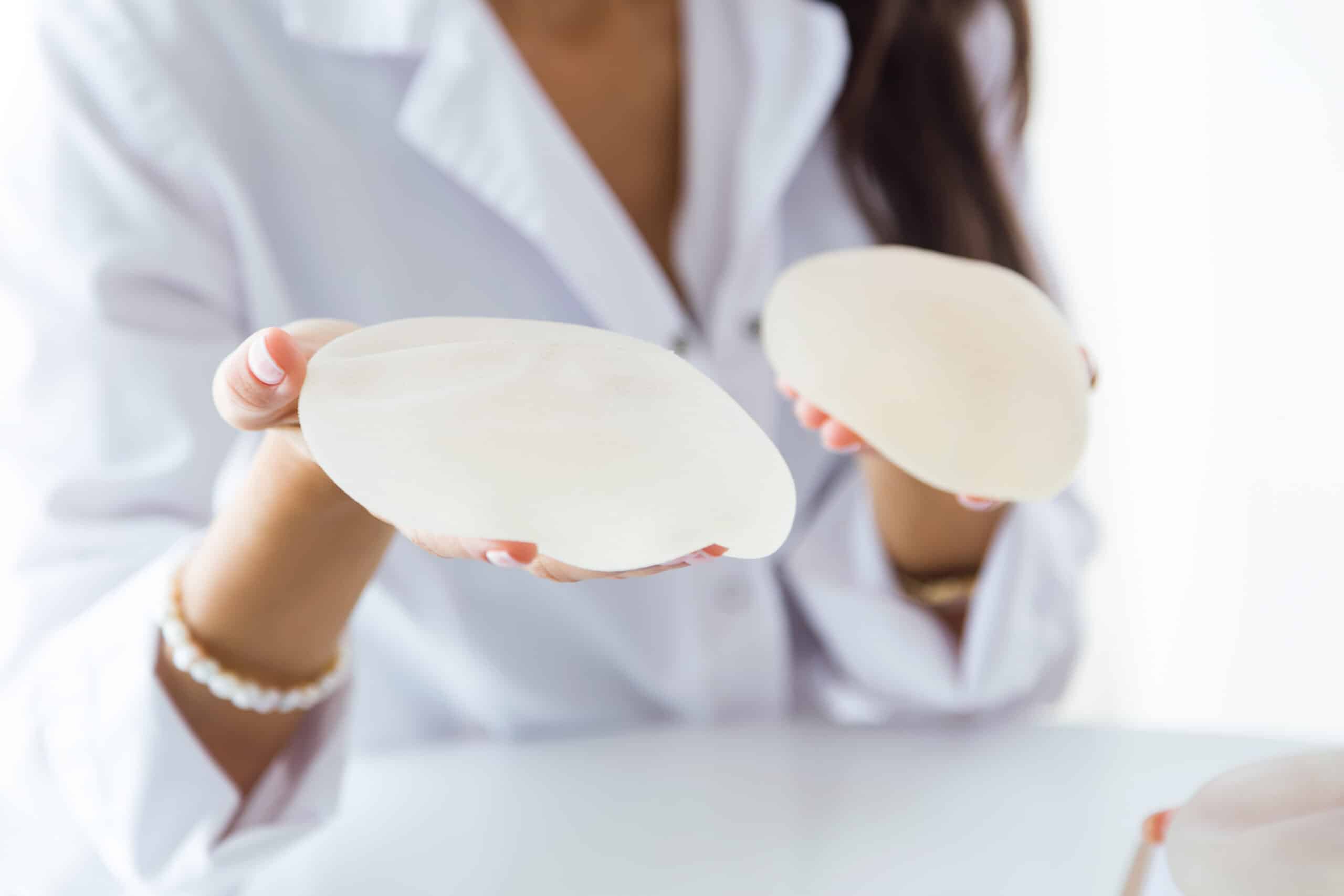 they look. Both are very safe, durable, and long lasting. Both silicone gel-filled and saline implants are approved by the Food and Drug Administration (FDA). Please note, that saline is less expensive to make then silicone, therefore, the implant manufactures charge more for silicone gel then saline implants.
The chief advantage of a silicone gel-filled implant is that it feels somewhat different than a saline implant. It has a fleshy consistency and "squeeze-ability"; many consider this to be a more “natural feel”. In general, the less “coverage” one has (thinner people) the more important this becomes.
In the unlikely event that a silicone gel-filled implants rupture, the gel is contained within the surrounding pocket. The effects of a ruptured silicone gel-filled implant are localized to the breast and have not been systemic. It is more difficult and expensive to detect a silicone gel-filled implant rupture. When saline implants rupture, the volume of the breast slowly diminishes over several days, or even over the course of a few weeks. The body absorbs the saltwater and is considered to be harmless.
Silicone gel-filled implant ruptures, however, may be silent and cause no notable change in the appearance or feel of the breast. It is for this reason that recommendations will be made for long-term follow-up in patients with gel implants to undergo diagnostic testing such as an MRI every five to ten years in order to assess the integrity of the gel-filled implant. Patients choosing silicone gel implants must be fully aware of this and weigh the benefits and risks. We use both types of implants depending on individual needs and preferences, and have a full line of both silicone gel and saline implants available.
It is important to note that I have thousands of patients with saline implants who are very happy. I also have thousands of patients with silicone implants who are very happy. If you survey your friends or acquaintances that have implants, you will generally find that either implant can provide a very nice breast enhancement.
Where can the incisions be made?
Three incisions are most commonly used for breast augmentation. When choosing incisions, it is important to consider many factors. Scars heal differently on different people. Scar camouflage is not only a function of the way you heal but also depends on your skin color, texture, and the way  you dress. An incision in the hair bearing region of the armpit does not leave a scar on the breast, but the resulting scar may be visible when the arms are raised. Women who wear tank tops, sleeveless shirts, or raise their arms during aerobic exercises might show an axillary incision more than an incision by the areola or under the breast fold.
The surgical exposure using the maxillary approach is more limited and usually requires a lighted camera on a metal rod (endoscope) to be inserted through the incision during surgery. This approach has a higher chance of complications and is usually avoided. A periareolar incision follows the curvature of the lower border of the areola, extending from approximately the 4 o'clock to 8 o'clock position. Scarring is usually minimal but visible. There is limited surgical exposure and there may be a higher chance of alteration in nipple sensation.
An incision can also be made beneath the breast along the natural crease, which offers excellent visualization of the surgical field. The scar is hidden by the lower curvature of the breast. This site is the most problem-free and is usually recommended in our practice. Insertion of implants through an incision at the upper edge of the navel must be performed with an endoscope and is seldom used.
Pocket Placement?
The pocket location for the breast implant is independent of the access incision used. The implants can be positioned beneath your breast gland and on top of the chest wall muscle, or beneath the muscle and breast. Placement considerations include the anatomy of your breasts, including the  quality and amount of existing breast tissue and skin, and your personal preferences. There are two important issues to consider. First, sub-muscular placement of the implant generally results in a lower risk of capsular contracture. Therefore, there is less chance that your implants will harden over time.
The risk of other problems is lower as well. The second issue pertains to how the implants will look. In general, the more padding you have over the implants, the smoother and more natural their periphery will look. Think of some of the women that you might have seen where the upper circumference of the implant is very sharp and the breasts look like they have been stuck on. Women with only a small amount of breast tissue get a better result when the implant is placed beneath the muscle to camouflage the edges of the implant and achieve a more natural look.
The sub-muscular position also provides more support for a longer lasting result. Breast tissue may be better visualized on mammograms when the implant lies behind the muscle. We generally prefer placing the implant under the muscle, using incisions hidden along the lower breast crease. In all cases, we listen to what you want after we have gone over the benefits and drawbacks of all of the different options for implant shape, texture, location, and insertion sites.
How is Breast Augmentation Performed?
Breast augmentation is performed under general anesthesia, but it can be done under local anesthesia with intravenous sedation. First a small (1-2 inch) incision under the breast, then the breast tissue and the muscle is lifted to create a space or pocket beneath the breast. The implant is then ready to be placed in the pocket.
What Should I Expect After a breast augmentation?
Your incisions will be covered with gauze and you will wear a soft surgical bra for protection and support, which has no underwire and opens in the front. After five to seven days, the gauze dressing will be removed, although we recommend that you wear the surgical bra or an elastic type of sports bra continuously for several weeks. Initially, your breasts may appear firm, swollen and to be sitting high on your chest.
As the swelling resolves and gravity comes into play, the implants will sink down slightly and assume a lower, more natural-appearing position. You will be told to minimize arm movements and to bend from the knees only as needed. You may be able to resume work within a week of surgery, but aerobic activity involving running, jumping or bouncing should be avoided for three to four weeks. We use absorbable stitches which should dissolve in two to four weeks.
What are the Risks of a breast augmentation?
Breast implants are not associated with the development of breast cancer and do not impair breast cancer detection. There has also never been a definitive association between breast implants and autoimmune or collagen vascular disorders. Breast augmentation is a very safe and effective surgical procedure, but it is surgery, and like any surgery has certain risks and potential complications.
Plastic surgery is an elective surgery and patients should understand the risks carefully before deciding to undergo surgery. It is also important to choose a surgeon who is apt at dealing with and correcting any potential complication that might occur. The following are most but not all of the potential risks and complications that you should familiarize yourself with:
- Bleeding or Hematoma (blood collection) Formation: In general, most people lose the amount of blood equal to one or two test tubes with their surgery. The risk of major bleeding or blood collection is about 3%.
- Wound Infection: This risk is less than 2%. Most patients receive intravenous antibiotics during the surgery and go home on antibiotic pills in order to minimize this risk.
- Altered Nipple Sensation: There is a chance of reducing nipple sensation or actually making it more sensitive or hypersensitive. As discussed earlier, it could depend on the incision and ranges from 0% to 15%.
- Scarring: All people scar differently, but there is always a scar even though it may be very faint.
- Asymmetry, Displacement: No two breasts are identical before surgery, and no matter how much your surgeon tries to make them similar, there will still be some differences between them depending on how closely you look. Implant displacement is possible after the surgery, but we minimize this by having the patient wear a special bra and/or binder in the immediate post-operative period.
- Implant Rippling: Saline implants in general show more ripples than silicone. This rippling is also more pronounced if the implants are under-filled. It might have to do with the texture of the implant, but this is controversial. The more breast tissue you have and the deeper the implants (sub-muscular) are placed, the more the implants are camouflaged and the less you will possibly see or feel any rippling. Replacing saline implants with silicone can often improve the appearance of rippling.
- Implant Rupture: Since the type of implants used and their structure has changed during the past few years, the true statistics about the rupture rate of new implants is not known. Nevertheless, it is known that implant under-filling increases the risks of implant fatigue and rupture. National implant brands will provide a warranty for your implants. Dr. Conkright will review your treatment options for breast augmentation, including pros and cons of each procedure, potential risks and complications, recovery, pre and post operative instructions, and aesthetic outcomes. This will enable you to make the choice that best suits your lifestyle and goals.

Schedule a Breast Augmentation Consult in Evansville, IN!
Call (812) 842-0240 today and book a one-on-one Breast Augmentation appointment with Dr. Conkright. Or, you can fill out the form in our contact page and our staff will help you set up your consultation. Our practice looks forward to serving you!
Related Resources
Contact Us Today!
Request an AppointmentTo learn more about our Plastic Surgery & Aesthetic Services, please contact us online or call us at 812.842.0240 to schedule an appointment!